
Quiet Mountain, Loud Talent
Written By Jake Kunst
October 10, 2026
It is no secret that Alta Ski Area has an extremely high concentration of incredible skiers. From the professionals who use it as training grounds to extremely skillful tourists, Alta draws elite talent at every level. There is an interesting dichotomy here, however: the resort doesn’t market or highlight the standout skiing that occurs on the mountain every single day. This conundrum has always perplexed me. How has a resort that prides itself on its vintage, soul-skiing identity become a sanctuary for adrenaline-seeking, freeride-oriented skiers?
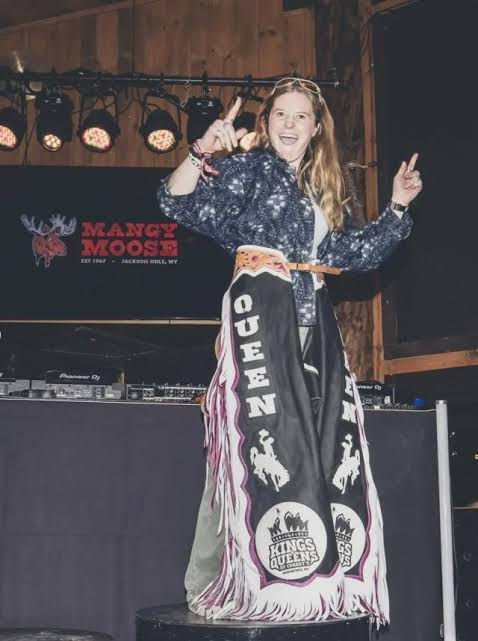
Seeking an answer, or at the very least a fresh perspective, I sat down with my sister Piper Kunst to pick her brain on the matter. If you’re not familiar with Piper, she is currently one of the best female freeride skiers in the world, a two-time champion of Kings and Queens of Corbets, and happens to call Alta home. Piper and I grew up in a little town in the Colorado Rockies and, thanks to our hippie ski-bum parents, both began skiing as soon as we could walk. My sister always had a knack for skiing, especially when it came to the more daring aspects of the sport. As my father used to jokingly say, between the two of us, Piper had the balls. As much as this served as motivation for me, his words carried merit. My sister has always been possessed by a quiet, unshakeable confidence that is evident in her skiing; "ski fast, take chances" is the perfect way to describe the way she attacks the mountain. So how did she end up at Alta, a resort that pedestals the “soul-skier” archetype over the modern, adrenaline-fueled spectacle of competitive freeride skiing?
Here is how our conversation went:
Q: Every resort in proximity to Salt Lake City is world-class in its own regard; what drew you to Alta?
Piper: “When we would vacation in Park City growing up, I knew Utah had good skiing, so when I decided to go to college, I chose the University of Utah. I actually started my Utah tenure skiing at Snowbird, as it was where most of my friends would go, and I really fell in love with Little Cottonwood Canyon.”
This made sense to me. As someone who constantly seeks the thrills of skiing, landing at Snowbird was a logical choice. It is another world-class resort that actively markets its unforgiving steepness, rugged cliffs, and massive vertical drops to attract a “different breed” of adrenaline junkie. This didn’t actually answer my core question, however, so I reiterated:
“How did you end up calling Alta your home resort?”
She had a much simpler answer this time:
Piper: “I started skiing at Alta because that's where Tristen would ski.”
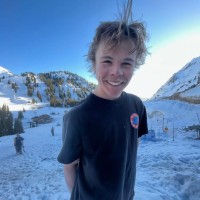
Tristen is my sister's boyfriend, another incredible athlete who calls Alta home. Tristen also
became a champion of Kings and Queens of Corbets last year, sharing the podium with my sister on Valentine's Day, no less. While their storybook romance is enough to make any sibling gag, beneath the sickeningly sweet coincidence lies a bigger truth: it’s a direct testament to the caliber of Alta’s core community, which quietly harbors some of the most elite skiers on the planet.

This brought up another question:
Q: Would you say that skiing at Alta made you the skier you are today, and why?
Piper: “Yes, I really learned to love skiing at Alta. I’m not sure you would agree with this, but growing up skiing at Breckenridge didn’t really do much to make me love the sport. It was always too cold, and the super fun terrain isn’t easy to access. Alta, and most Utah resorts for that matter, provide a much better climate for me, and the insane terrain is significantly more abundant and accessible. It is much easier to lap and get reps skiing at Alta than it was where we grew up. Also, there are more opportunities to ski with people who are better than me in Utah because there is a much larger population of hardcore skiers where we live now.”
Q: You mentioned that skiing with others who were better than you shaped the skier you are today. Is there an informal mentorship culture at Alta—the older generation passing things down to younger skiers—or is it more that everyone just pushes each other by being out there every day?
Piper: “I’d say the latter of the two. I wouldn’t personally say that the ‘older generation’ goes out of its way to pass on knowledge to the younger generation of skiers. Everybody is just out skiing for themselves, every day. Because of this, though, everyone pushes each other. The community has been built upon seeing other people do crazy cool things that make you want to do the same. To be fair, though, at the end of the day, the people who ski at Alta ski here because they love skiing, not just because they are trying to become the best skier on the mountain.”
That last statement really resonated with me and offered an glimpse into the bigger picture. Just as Alta avoids marketing extreme skiing, many of the extreme skiers who frequent the area aren’t too concerned with marketing themselves, either.
I remember back to my first season skiing in Utah in 2021, following my sister’s crew down an early morning High Boy on a powder day. I was certainly still learning the terrain, but against my better judgment, I decided to closely tail one of the best skiers I know today: Oz Scott. Oz is what many would consider "under the radar." He doesn’t have an insane social media presence, won’t boast about his ability to others, and fundamentally enjoys skiing for skiing—not for the accolades or fame that many others chase within the sport.
Regardless, as we approached a cliff near the bottom of the run, Oz, at full speed and without a shred of hesitation, pointed his skis directly off the edge, set for a backflip, and disappeared below. I had to shut down my speed to avoid careening off the ledge myself, and was amazed by what I saw. The cliff that Mr. Scott had flung himself off was nothing shy of 30 feet to a pinpoint, flat landing. It was no issue for him however; by the time I made it to the takeoff, he was already speeding through the rest of the run, back into the lift line to run it back again. What amazed me most wasn’t the trick, the massive cliff, or the difficulty of it all, but rather the carelessness with which Oz approached it. There was no stepping out the in-run, no asking anyone to film, and certainly no callout to the rest of the crew. What would be a season-defining feat for many others was just another run for him.
This sentiment is shared among many of the skiers who call Alta home. Most are more focused on actually skiing than the frills of social media clout and industry fame. Furthermore, what makes this community truly special is that the people here ski to live, versus live to ski. To them, skiing isn’t a hobby they fit into their spare time, and it’s not a brand identity they wear for the world to see. It is the very foundation of how they structure their existence. You’ll find handymen, plow drivers, instructors, and baristas who intentionally chose trades that keep them close to the canyon. They aren't trying to climb a corporate ladder or escape reality; they have created a reality where skiing itself is a sacred, non-negotiable part of the daily routine. I had a feeling this was exactly what my sister was hinting at.
Q: Alta, the resort and its businesses, is famous for having staff who are also elite skiers. Does that blue-collar, unglamorous vibe describe what you're trying to say?
Piper: “Yes, for the most part. I think most people are here because they already 'get' skiing, or because they're already involved in the industry. Not many of Alta’s people are dipping their toes into the world of skiing; they are usually already established. This helps create a really tight-knit community because everyone has a similar mindset and understands each other. It's one of the things that makes Alta great.”
I can’t argue with this. Most of the locals in Little Cottonwood Canyon are here because of their tenured histories with the sport. More often than not, they either grew up with Little Cottonwood as a backyard or were raised skiing in another state and moved to Salt Lake City in pursuit of the "Greatest Snow on Earth."
This doesn’t entirely explain the tourists, however, who also seem to ski at a much higher level than destination travelers at other resorts. My sister was able to offer insight:
Q: It's not just the pros—regular skiers here seem to ski at a level you don't see at other resorts. Have you noticed that too, and why do you think that is?
Piper: “I have noticed this. I think the majority of the skiers who visit Alta are elite because they visit Alta primarily for skiing, not the ‘resort factor’ that you would get at another mountain such as Breckenridge or Aspen. Alta doesn’t pride itself on fancy amenities, luxury shopping, or nightlife; it focuses on the skiing experience. This draws in people who are more focused on their time on the hill versus in a village or out on the town. Also, because there are noticeably better skiers here, other great skiers focused on great skiing are more inclined to come here rather than somewhere else.”
Now, you may be thinking, Jake, this is an open-and-shut case: good skiers bring in other good skiers, what's the big deal? To me, the craziest part of the phenomenon is that Alta doesn’t market its great skiers or extreme terrain; they market the feeling of a ski area lost in time—one that doesn’t rely on flashyiness to operate. How do these two drastically different outlooks exist at the same time?
Left) a picture Alta wouldn't use versus Right) a picture more alligned Alta's marketing standards.
Q: Alta doesn't market itself the way big destination resorts do. Do you think the lack of media hype in regards to extreme skiing is actually what keeps the community strong, versus resorts that get overrun once they blow up?
Piper: “I think the marketing, or lack thereof, keeps the community tight. Even the tourists are in the scene for that reason as well; they come to Alta to ski Alta, not for touristy reasons, or because they know they’ll be in the presence of skiing excellence."
Once again, her answer seemed spot on. But it made me wonder about the fine line between protecting this secret and exploiting it:
Q: Do you think Alta could market itself as a "pro skier factory" and still keep what makes it special, or would that ruin it?
Piper: “One of the reasons they don't hone in on that is because the biggest marketing pillar is about the greatest snow on earth. This is how they retain true, hardcore skiers. That being said, I don't think that marketing Alta as a pro skier factory would overrun the resort. I personally don’t think people choose a ski area to visit based on whether they think they can get better at skiing or if better people ski there. Most skiers are happy just getting time to explore and ski great snow. Also, there is so much incidental advertisement about the resort already via social media that I don't think Alta doing the same would have much of an effect.”
The interview left me with a clear epiphany: this "paradox" of Alta I had constructed in my head isn’t actually a contradiction at all. Alta doesn’t need to market its elite athletes, and its athletes don't need the resort to validate their status. In a ski industry increasingly dominated by corporate mega-passes, viral social media trends, and overzealous commercialism, Alta remains fiercely protective of its identity. By intentionally ignoring the flashy resort factor and focusing entirely on the raw, unadulterated experience of skiing itself, it has organically created the ultimate sanctuary for the world’s best skiers—professional and recreational alike.
It is a place where a two-time Kings and Queens champion like my sister Piper, a breakout star like Tristen, and an under-the-radar legend like Oz Scott can all share a chairlift with an out-of-state tourist, completely unbothered by the noise of the outside world. They aren't there to build a brand or cash a paycheck; they are there because the canyon demands total presence, and the community relies on a shared, quiet respect for the sport.
Comments