
Axolotl! At this Altitude?
Written by Jake Kunst
October 1st, 2026
For almost five years, I told anyone who would listen that an endangered species of Mexican salamander was living in a lake at nearly 10,000 feet in Utah. Friends, family, strangers on chairlifts — I was fully convinced, and fully wrong.
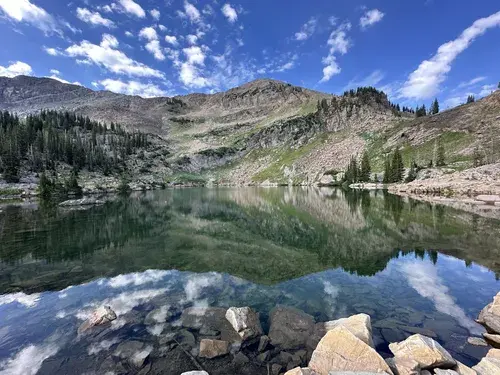
It started during my freshman year at the University of Utah in 2021, on my first hike to
Cecret Lake in Albion Basin. Sitting at 9,875 feet above sea level, Cecret Lake stands out as one of the most pristine alpine lakes the Wasatch has to offer. If you have ever made the trek, you can likely understand where the lake gets its namesake. Cecret Lake seemingly pops out of nowhere as soon as you crest the final ridge before standing at the foot of the tarn. One second you are scrambling up a rock face, the next you are eye level with a body of glistening blue water. (We can thank the literacy skills of 1800s silver miners for the spelling — "Cecret" instead of "Secret," presumably from the same crowd who might've spelled their own trade "cilver.")
But the real secret waiting at the lake was in the water: small, alien-like, grinning creatures with gills that protrude from the top of the head like antlers. I recognized them immediately as Axolotls — the internet-famous aquatic salamander known for its unique appearance. Naturally, like any capable college student, I decided to affirm my findings by doing absolutely zero research. I had "discovered" Axolotls living wild at my favorite ski resort. It wasn't until I started work with Friends of Alta this past August that I realized I had been happily misinforming friends, family, and strangers for years.
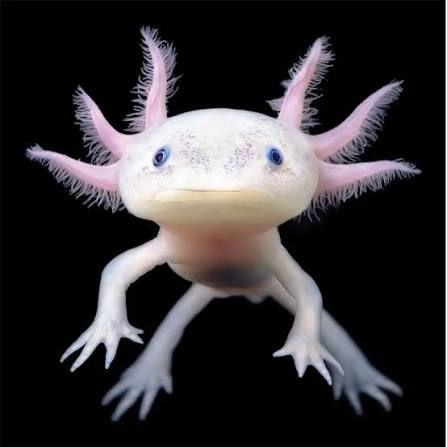
I wasn't the only one. I've heard the same legend of the "Alta Axolotls" repeated on countless chairlift rides up Sugarloaf, among plenty of other occasions. If you have ever seen one of the Tiger Salamanders, you can easily understand the cause of this misidentification. Aside from the colors (where Tiger Salamanders tend to take on darker, earthier hues and Axolotl tend to be more vibrantly colored), both salamanders look exactly alike in their juvenile (or larval) stages, donning a crown of gills, a tail fin, and their signature mischievous grin. Both species can also regenerate entire body parts, including limbs, tails, and organs. To the average onlooker, it seems as if the two animals might as well be the same. It wasn't until I started working with Friends of Alta this past August that I learned the truth: the creatures in Cecret Lake aren't Axolotls at all. They're Tiger Salamanders — a close relative, and an easy one to confuse them for. In their juvenile stage, both species look nearly identical: same gill-crown, same tail fin, same mischievous grin. Both can even regenerate limbs, tails, and organs.
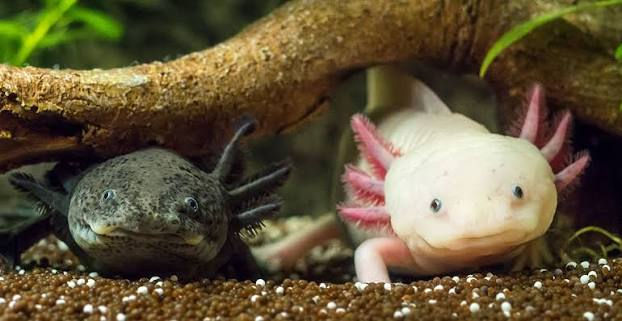
The real difference isn't in how they look — it's how they grow up. Most salamanders, Tiger Salamanders included, eventually undergo metamorphosis: they trade gills for lungs and move onto land, only returning to water to breed. Axolotls skip that step entirely, through a process called neoteny — they reach full maturity without ever losing their juvenile traits, and stay underwater for the rest of their lives, like most Alta skiers who move to Utah in their 20s and can't find a good enough reason to leave.
While the Tiger Salamander may not be as well known as its familial counterpart, it can be argued that it is just as unique. The ability to live on both land and water, especially at 10,000 feet, is not common within the animal kingdom. They are also a keystone species of the lakes and ponds they inhabit, which makes their protection crucial to the health of their ecosystems. At Cecret Lake, and all of Little Cottonwood Canyon in general, swimming is prohibited. Mainly meant to protect the watershed, this rule also protects the creatures susceptible to environmental disruptions. Tiger Salamanders are particularly susceptible to habitat disruptions, as they have semi-permeable skin, and changes to the water can be extremely detrimental to their health. Humans may carry chemicals, diseases, and foreign substances on their skin that wash off into the water while swimming. Swimming in lakes with Tiger Salamanders, such as Cecret Lake, can introduce risks detrimental to the survival of the ecosystem. It is important to remember this: a simple dip for you can be the end-all for a creature that can't speak up for itself.
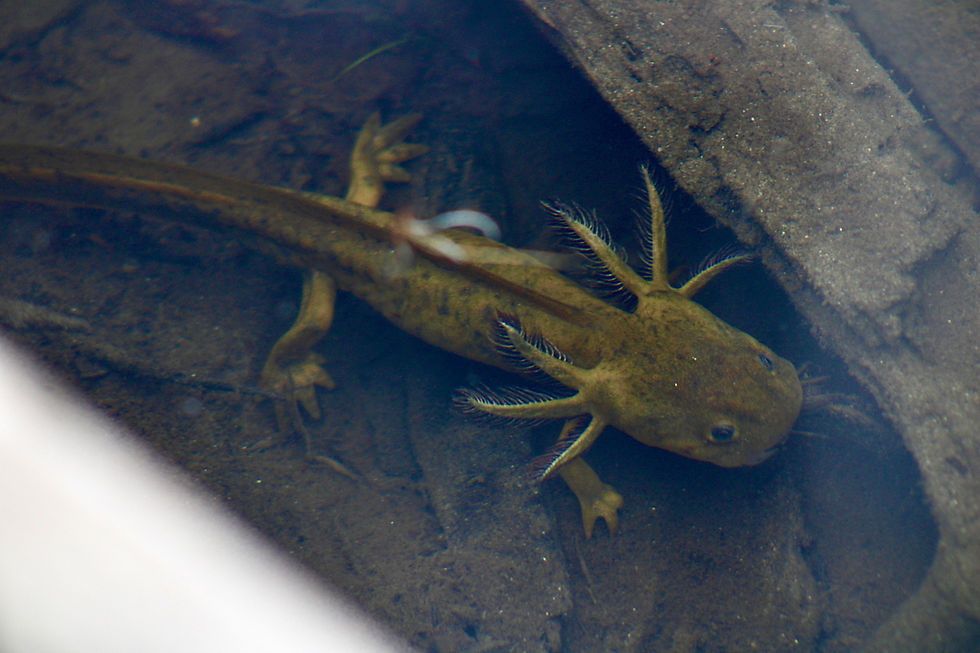
If you have not seen for yourself the almost otherworldly creatures that inhabit Cecret Lake, I could not recommend it enough. If you start at the Albion Basin summer road, the 1.8-mile out-and-back hike to the lake is one of the less difficult routes in the Wasatch and can be done in an afternoon. The best times to visit are in late July through August, as the eggs laid in spring have by then hatched into much larger juveniles who surround the edges of the lake. They are most abundant in early mornings or late evenings, so if you want to give yourself the best window for spotting success, make sure to plan accordingly. Please respect the wildlife as well as other visitors in the basin, and remember to leave the swimming for the salamanders.
Comments